
As the demand for memory care services escalates, particularly among an aging population, innovative approaches are fundamentally reshaping care paradigms to enhance resident outcomes. The implementation of person-centered care models forms the foundation of customized care plans, where individual preferences and life histories guide tailored support. This nuanced approach honors dignity while promoting engagement and enhances the quality of life for residents experiencing memory loss. The rising demand for specialized memory care underscores the importance of adapting these innovations to meet the unique needs of each resident.
Evidence-informed routines and family engagement strategies facilitate consistent dementia care, ensuring that care teams effectively interpret and respond to nonverbal communication, which is essential for residents with dementia. The SHINE® Memory Care Program exemplifies this commitment by providing staff training and engagement strategies that are essential for delivering high-quality care.
Effective dementia care relies on evidence-informed routines and family engagement, enabling teams to interpret vital nonverbal communication.
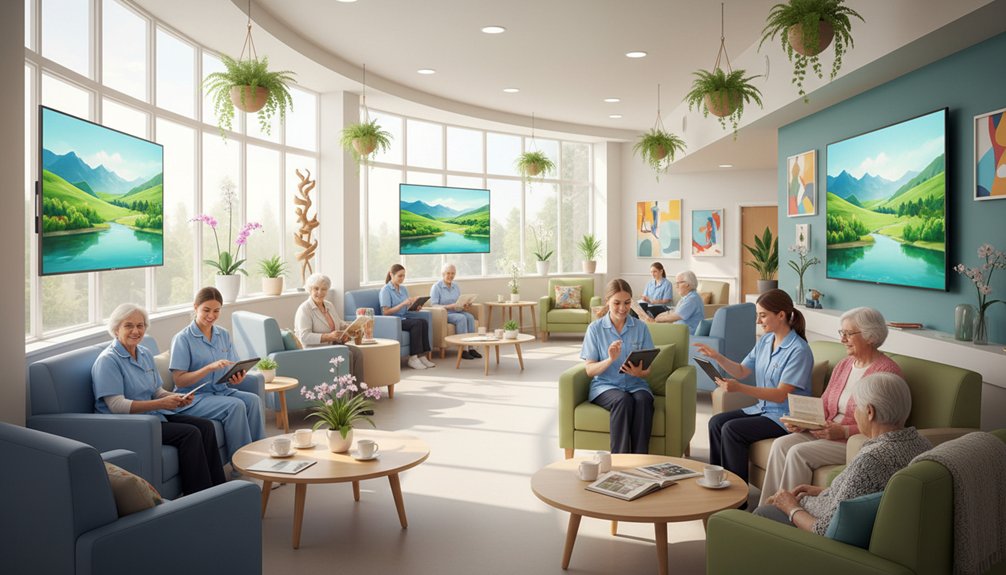
Integrating technology into care delivery has become a standard feature in modern memory care facilities, leveraging smart home devices, artificial intelligence, and digital health monitoring tools. These innovations enable staff to provide personalized care while preserving resident safety and independence. For instance, virtual reality applications foster emotional well-being by allowing residents to relive cherished moments, greatly reducing agitation.
AI-enhanced fall prevention systems further bolster safety and autonomy, utilizing data-driven monitoring to track health changes and promote proactive care. Advanced fall prevention and patient monitoring technologies alleviate pressure on care teams by offering real-time insights and enabling personalized care service plans for residents at risk.
Systems like SafelyYou empower caregivers with vital information that enhances confidence in delivering compassionate memory care. Consequently, innovations in monitoring and assessment considerably mitigate staffing challenges and operational burdens.
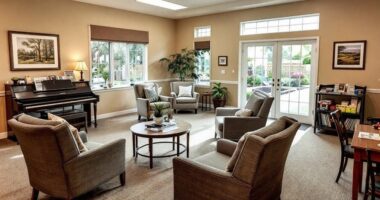
Therapeutic and engagement techniques, such as reminiscence therapy and music therapy, enhance cognitive function and emotional well-being, promoting dignity and independence among residents. Additionally, environmental design prioritizes natural elements and sensory-friendly spaces, fostering comfort and reducing confusion.