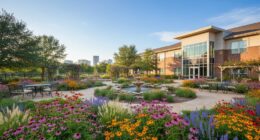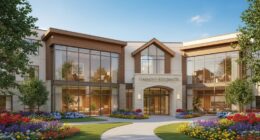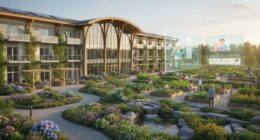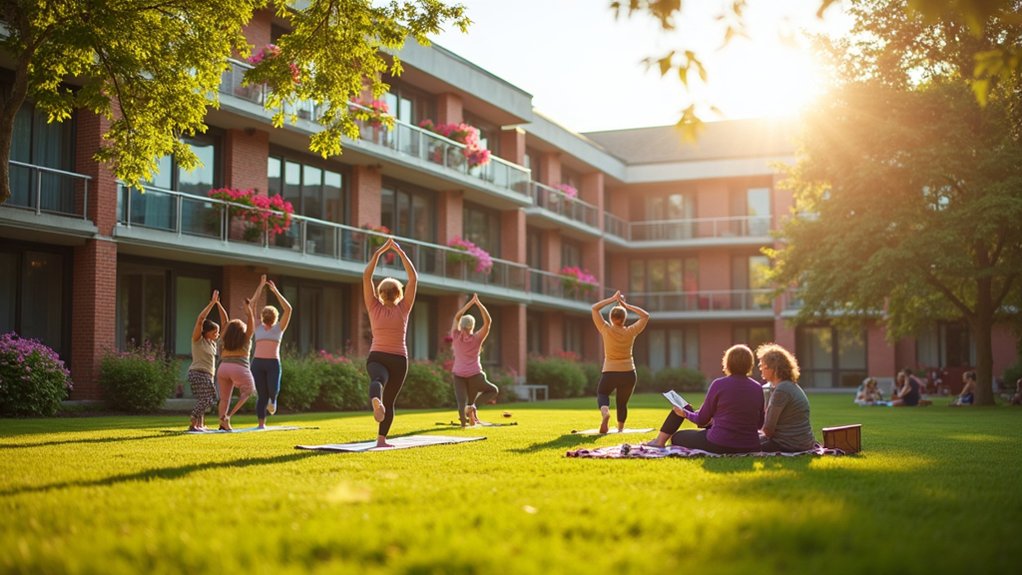

As universities grapple with declining enrollment—evident in the 3.6% drop in freshman numbers in 2023 and a cumulative decline of over 600,000 students from 2009 to 2019—many institutions are strategically repurposing campus resources to establish senior living communities, a trend that has seen at least 80 institutions either hosting or connecting to such facilities.
Approximately one-third of these university-affiliated senior living communities are located adjacent to or on campus, facilitating resource-sharing that reduces operational costs through combined services like IT and security. Moreover, affluent seniors are increasingly seeking life-long learning opportunities, which these communities provide. Many seniors are attracted to these communities due to their access to athletics, fine arts, libraries, and other university amenities.
The demand for university-based retirement communities continues to grow, with presale rates reaching 80-90% prior to opening, indicating strong market interest. Remarkably, credentialing has begun, with Arizona State University and Furman University recognized as the first to receive such designation.
This trend not only fills excess campus capacity but also stabilizes financial situations, as demonstrated by Southern Oregon University’s projected 4.3-acre project set to enhance revenue streams considerably.
The demographic landscape presents additional opportunities, as over 4.1 million Americans will turn 65 within the next two years. Many of these seniors possess higher education credentials, with 57% of high-income seniors holding college degrees.
This demographic shift aligns with the appeal of intergenerational environments, which foster lifelong learning and community engagement. Residents of facilities like Lasell Village at Lasell University often cite university affiliation as a primary motivator for relocation, as access to educational resources, exercise facilities, and cultural events becomes increasingly attractive.
Furthermore, university retirement communities serve as living laboratories for intergenerational learning, enhancing both educational and social outcomes. The successful implementation of projects such as Mirabella at Arizona State University, which sold out pre-construction, exemplifies the financial viability and growing acceptance of this model.
As universities continue to navigate the demographic cliff and declining traditional student populations, the conversion of campus spaces into luxury senior living communities represents a viable strategy for diversification and sustainability in higher education finance.