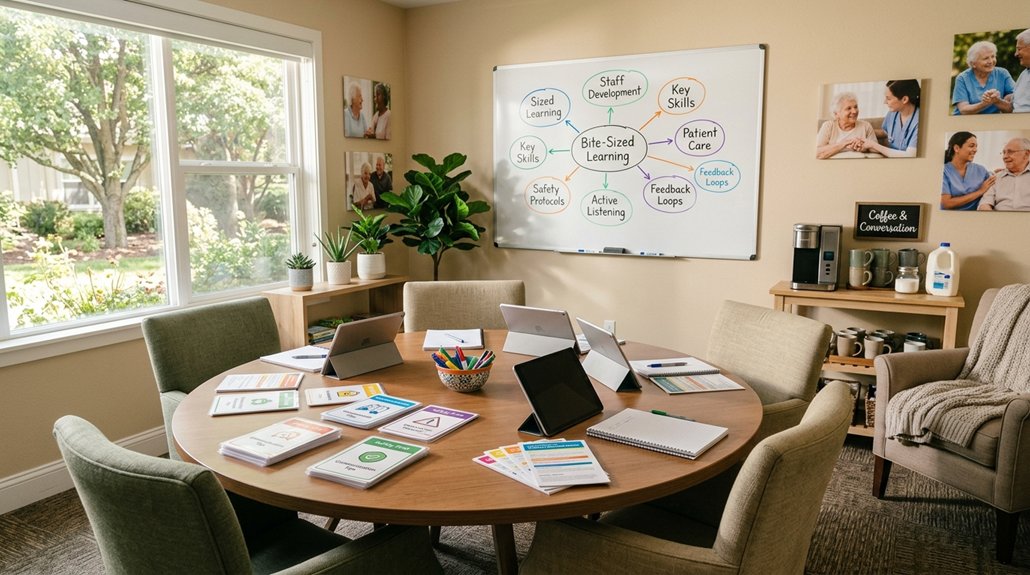

In an era marked by escalating costs and staffing challenges within the senior living sector, bite-sized training emerges as an essential solution to enhance workforce efficacy and resident care quality. This method leverages microlearning, which utilizes short, focused lessons that can be seamlessly integrated into limited shifts, thereby minimizing disruption to resident care. Given that the national median cost of assisted living in the United States stands at $6,200 monthly and $74,000 annually, the financial necessity for efficient training methods becomes increasingly evident.
Bite-sized training revolutionizes senior living by enhancing staff efficacy and care quality through focused, manageable lessons.
Senior living organizations face persistent staffing and training pressures, underscoring the value of scalable staff development. Bite-sized training formats allow for lessons to be delivered in small, manageable modules, often centered on a singular skill or policy. This structure enhances accessibility for caregivers who may find it challenging to participate in longer classroom sessions due to the demands of their roles. Furthermore, with approximately 30,600 assisted living communities in the U.S., the need for trained staff is more critical than ever. Additionally, DEIB measures can be incorporated into bite-sized training to foster a more inclusive environment for both staff and residents.
Research indicates that training formats aligned with daily workflows not only improve learning opportunities but also support knowledge retention through repeated exposure to vital topics.
The benefits of bite-sized training extend to workforce development, as shorter courses tend to yield higher completion rates compared to traditional, time-intensive instruction. Moreover, this approach facilitates faster onboarding, allowing new hires to assimilate essential procedures in digestible segments. Refresher training is also simplified, enabling compliance with regulations related to resident safety and quality improvement. By targeting specific skill gaps, bite-sized formats enhance the precision of training interventions.
Ultimately, better-trained staff are more adept at implementing consistent communication and caregiving practices across shifts, thereby elevating care quality and resident satisfaction. The integration of scenario-based learning further refines decision-making capabilities in daily care situations.
Stronger staff development correlates with a more stable workforce, which is vital for sustaining high standards of resident care and ensuring safety. This empirical evidence substantiates the transformative potential of bite-sized training in the senior living sector.