As the senior population in Austin has surged nearly 75% over the past decade, driven by favorable healthcare options and a supportive climate, the demand for specialized memory care facilities has intensified considerably.
With the median rent in Austin memory care facilities standing at $6,260 per month and the average cost reaching $9,186, financial implications for families seeking appropriate care are substantial. The price range for memory care spans from $7,540 to $12,085 monthly, highlighting the financial burden in comparison to the national average of $5,625.
The substantial increase in Austin’s 65+ demographic correlates with a rise in the prevalence of dementia, as 55% of Texas nursing home residents receive this diagnosis. Conversely, 72.7% of assisted living residents are free of cognitive impairments, indicating a dichotomy in care needs.
The rising 65+ population in Austin highlights a growing need for specialized memory care, with significant dementia prevalence among nursing home residents.
The region boasts 1,183 nursing facilities and 2,008 assisted living options capable of addressing these varied requirements.
Security features in Austin’s memory care communities greatly enhance safety for residents. Importantly, 100% of these facilities offer round-the-clock staffing, while 75% provide on-site nursing, guaranteeing timely interventions. Additionally, many facilities emphasize personalized care to ensure that residents receive the attention they require.
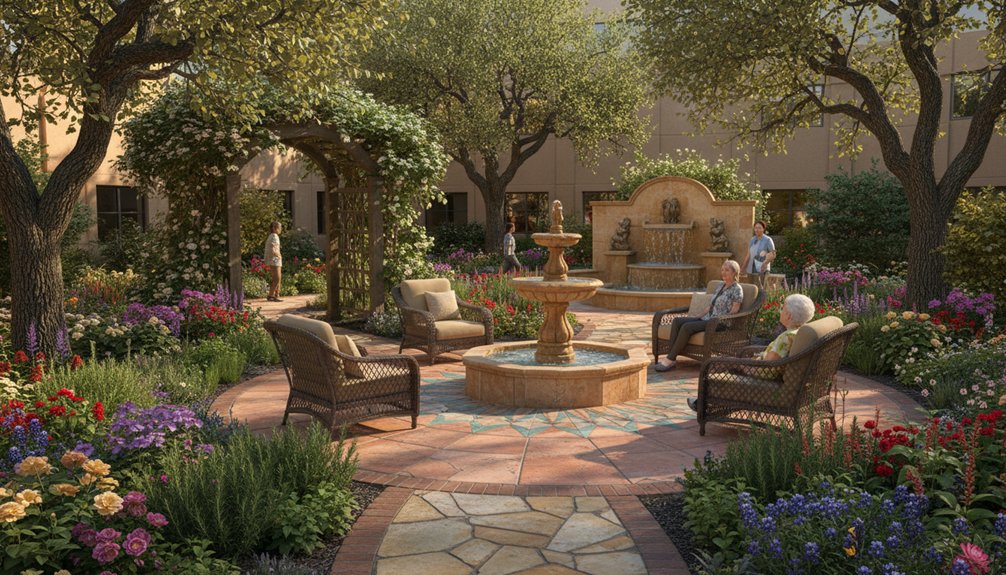
Moreover, 70% of communities are specifically designed for accommodating memory loss, featuring secure environments that mitigate confusion and wandering. Intentional features are integrated into these facilities to create a supportive atmosphere for residents.
Design elements also play a vital role in fostering an ideal living experience. Human-centered architecture is employed to promote comfort and reduce cognitive disorientation, while specialized layouts facilitate navigation for residents grappling with memory loss.
The focus on structured environments minimizes stress, essential for those with dementia.
Key services encompass assistance with activities of daily living (ADLs) and cognitive stimulation, often included within the rent, which reduces unforeseen expenses. Enhanced caregiver-to-resident ratios guarantee personalized care plans that cater to individual needs, reflecting a thorough approach to memory care.
As Austin’s memory care landscape evolves, local support organizations, such as the Alzheimer’s Association Capital of Texas Chapter, further bolster these initiatives.