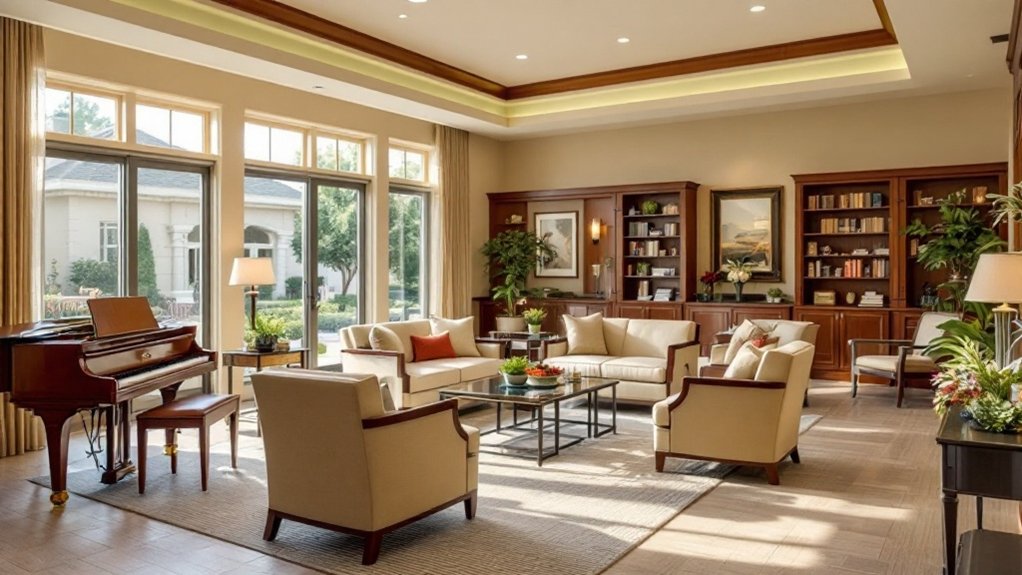

While traversing the complex landscape of senior care options often presents significant challenges for families, detailed understanding of the distinctions between assisted living and memory care facilities empowers more informed decision-making for elderly loved ones requiring specialized support.
You’ll find that assisted living environments typically offer private or semi-private apartments with flexible service models designed to accommodate your loved one’s evolving requirements for activities of daily living (ADLs) assistance. These communities deliver extensive programming including thrice-daily nutritional services, transportation coordination for external appointments, and robust social engagement calendars featuring exercise classes and entertainment options—all while maintaining cost-efficiency compared to skilled nursing facilities.
Memory care options, conversely, manifest across multiple operational models: standalone specialized dementia facilities, integrated units within existing assisted living communities, dedicated neighborhoods in traditional nursing homes, continuing care retirement communities (CCRCs), and in-home personalized services. With monthly costs averaging $6,160, memory care facilities reflect a premium pricing structure due to their specialized nature and enhanced staffing requirements.
The distinguishing features of memory care include continuous 24/7 professional supervision, enhanced security protocols to prevent elopement behaviors, and therapeutic interventions specifically calibrated to address cognitive impairment. Standalone communities are particularly effective as they feature soothing décor and memory aids that promote familiarity and comfort for residents with memory impairments. You’ll observe implementation of evidence-based sensory supports such as aromatherapy alongside structured music, art, and animal-assisted therapies designed to maximize remaining cognitive function and mitigate behavioral symptoms associated with dementia progression.
When evaluating appropriate placement options within your geographic radius, you should conduct comparative analysis of staff-to-resident ratios, training certification requirements, and security infrastructure between assisted living and memory care environments. Memory care facilities implement alarmed doors and controlled access points to ensure resident safety while preventing wandering.
Through meticulous evaluation of these specialized senior living environments, you’ll identify communities offering appropriate clinical oversight, engagement opportunities, and environmental adaptations aligned with your loved one’s specific requirements—ultimately facilitating ideal quality of life while addressing progressive care needs.