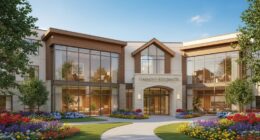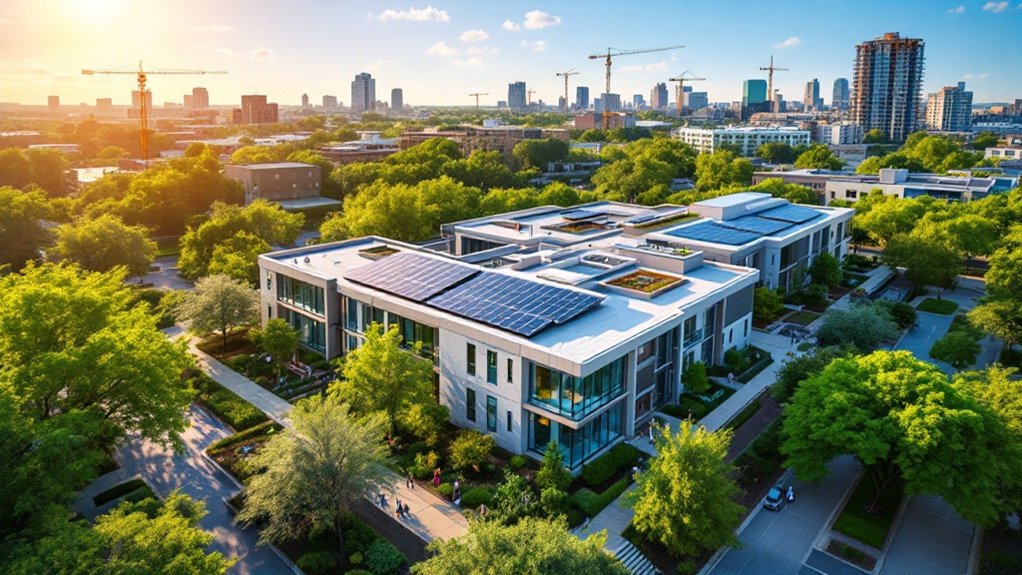

As the rapid urbanization of Texas metropolitan areas continues to reshape the demographic landscape, senior housing renovations have emerged as a critical component of sustainable urban growth strategies across the nation. You’ll find nearly half of existing senior living facilities were constructed before 2000, necessitating thorough modernization to accommodate evolving resident expectations and technological advancements while adhering to contemporary energy efficiency standards.
The projected surge in senior housing demand—with occupancy rates anticipated to reach 88% by 2025—underscores the urgency of addressing the supply-demand imbalance through strategic renovation initiatives rather than solely relying on new development. Texas cities, including Houston, Dallas, and Austin, have implemented market-friendly zoning policies that facilitate both renovation and new construction across diverse price points, effectively creating housing ecosystems that support intergenerational communities and age-in-place options within vibrant urban centers. The extraordinary population growth of these cities, with Houston increasing by 38% since 2000, has intensified the need for diverse housing solutions across all age demographics.
Strategic renovations, not just new development, will address the urgent senior housing shortfall as Texas cities lead with innovative zoning policies.
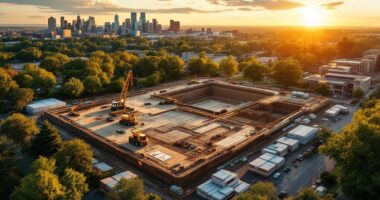
Phased renovation approaches have gained traction among developers and operators due to their cost-effectiveness and capacity to maintain operational continuity while incrementally updating critical areas such as dining spaces, communal environments, and residential units. The focus on comprehensive wellness in these renovations extends beyond fitness centers to include design elements supporting social connection and emotional health. Modern retirement communities increasingly emphasize mixed-generation living to create vibrant, socially connected environments that benefit residents of all ages.
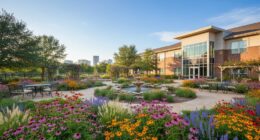
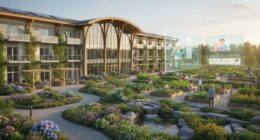
Your investment in biophilic design elements, wellness-centered amenities, and adaptive spatial configurations during renovations will markedly enhance resident satisfaction while extending property lifespans and improving marketability to incoming generations of seniors.
Technology integration represents a cornerstone of modern senior housing renovations, with telemedicine capabilities, emergency response systems, and app-based service platforms transforming operational efficiency while simultaneously improving care delivery models.
The incorporation of sustainable building practices—including energy-efficient systems, eco-conscious materials, and water conservation technologies—has demonstrated measurable reductions in operational costs while aligning with increasing market demand for environmentally responsible senior living options.
The convergence of Texas’s pro-development urban policies with forward-thinking renovation strategies has created a replicable model for addressing senior housing challenges in other rapidly growing regions, including Los Angeles, where similar demographic shifts necessitate innovative approaches to accommodating an aging population within dynamic urban environments.