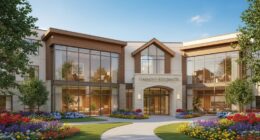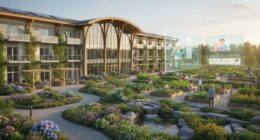

Across Montana, a robust network of over 50 nonprofit service providers forms the backbone of the state’s senior living infrastructure, known as the Montana Senior Living Network. You’ll find this coalition meticulously addressing the multifaceted needs of an aging demographic, primarily rural, through a spectrum of services including assisted living, dementia care, and caregiver support.
With Montana’s senior population facing distinct rural health disparities, as evidenced by limited healthcare access and economic constraints across counties like Flathead, Lake, and Missoula, the network’s strategic outreach targets areas of greatest need, serving a demographic where smaller communities report older age profiles requiring tailored interventions. Staff members receive specialized dementia training to effectively manage residents’ behavioral challenges and maintain a safe, comfortable environment.
Montana’s senior population grapples with rural health disparities, prompting the network’s targeted outreach to underserved counties like Flathead, Lake, and Missoula.
Delve into the operational framework, and you’ll uncover a searchable database facilitating access to nursing homes, Alzheimer’s care, and aging services, alongside administrative oversight of adult protective services and two state veterans’ homes.
The network’s partnerships, especially with the Montana Geriatric Education Center consortium, bolster professional development via affiliations with universities and research institutes. Quantitatively, the network supports Medicaid and Supplemental Security Income eligibility for elderly and disabled Montanans, impacting thousands annually, while local Area Agencies on Aging, such as Area VIII in Great Falls and Area X in Missoula, deliver critical meal programs, transportation, and care management to mitigate rural isolation, with service coverage spanning multiple counties including Sanders and Ravalli. Additionally, the network collaborates with programs like Meals on Wheels to ensure nutritional support for seniors who may struggle with food access in remote areas.
You must recognize the advocacy infrastructure, exemplified by the Montana Long-term Care Ombudsman Program, which safeguards resident rights in long-term care facilities, addressing quality-of-life metrics with precision. Carbon County’s involvement in the AARP/WHO Network of Age-Friendly Communities, since joining in February 2018, further exemplifies this commitment to improving livability for older adults through structured action plans and community engagement AARP/WHO membership.
Specialized Intervention Services in Western Montana further enhance this matrix by offering guardianship and financial oversight training across several counties, ensuring systemic protection for vulnerable populations. Meanwhile, age-friendly initiatives, such as Carbon County’s membership in the AARP/WHO Network, prioritize livability across eight domains like housing and social participation, driven by resident surveys and a structured three-year action plan.
Ultimately, you’re witnessing a data-driven ecosystem where cross-sector collaboration and community-based support services converge to address Montana’s rural senior living challenges. The network’s reach, underpinned by rigorous coordination and measurable outcomes, positions it as a leading model of nonprofit senior care infrastructure, targeting systemic disparities with unparalleled granularity.