
Independent living communities cater to self-sufficient adults aged 55+ who desire maintenance-free living while retaining full autonomy over their schedules and care decisions. In contrast, assisted living facilities provide 24/7 staff support, scheduled assistance with daily activities, and extensive medical oversight for seniors requiring structured care. While both options offer community engagement and amenities, the fundamental distinction lies in the level of hands-on support and medical supervision. Further analysis reveals distinct operational frameworks that shape these senior living environments.

While both independent living and assisted living communities serve aging adults, the fundamental distinctions between these residential options lie in the level of care provided and the degree of autonomy afforded to residents. Independent living communities, typically restricted to individuals aged 55 and older, emphasize a self-sufficient lifestyle where residents maintain complete autonomy in their daily activities, whereas assisted living facilities incorporate thorough support systems with 24/7 staff availability for hands-on assistance with activities of daily living.
Independent living prioritizes autonomy for self-sufficient seniors, while assisted living provides comprehensive care support for those needing daily assistance.
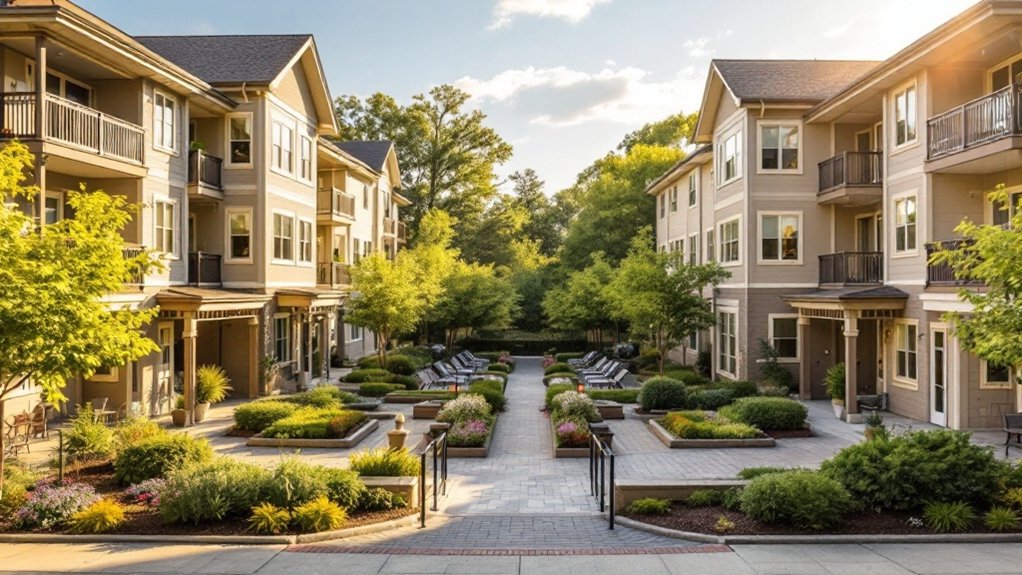
The architectural and operational frameworks of these communities reflect their distinct purposes, with independent living featuring private residences equipped with full kitchens and customizable living spaces within campus-style settings that promote active lifestyles. Residents can enjoy multiple dining options including sit-down restaurants and casual take-out services, while still maintaining the ability to prepare meals in their own homes. These communities integrate extensive amenities, including fitness centers, communal dining facilities, and social venues, while maintaining a neighborhood ambiance through interconnected pathways and shared spaces that foster community engagement without compromising individual independence.
The service models between these residential options demonstrate significant variance, as independent living mainly focuses on lifestyle enhancement through maintenance-free living, encompassing housekeeping, property maintenance, and security services, while explicitly excluding direct medical care or personal assistance. Residents typically rely on Social Security and pensions to cover their monthly expenses. Assisted living facilities offer communal meals and structured social activities that create a more comprehensive care environment for residents requiring additional support.
The distinction in independence levels manifests in the residents' daily routines, where independent living community members maintain complete autonomy in managing their schedules, meals, and activities, accessing third-party services as needed for supplemental support.
This contrasts markedly with assisted living environments, where staff actively participate in residents' daily care routines, providing scheduled assistance with personal care, medication management, and other essential activities, while maintaining a structured support system that guarantees resident safety and well-being through continuous monitoring and immediate access to care personnel.
Frequently Asked Questions
Can Couples Live Together in Independent or Assisted Living Communities?
Yes, you'll find that both independent and assisted living communities accommodate couples, though with distinct arrangements.
In independent living, you'll share fully-equipped apartments or homes while maintaining complete autonomy.
Assisted living offers shared residency with individualized care plans, where you and your partner can receive different levels of support while cohabitating, though space may be more limited than independent living options.
What Happens if a Resident Runs Out of Money?
If you run out of money in a senior living community, you'll need to explore multiple contingency options, including Medicaid coverage for assisted living, which covers 65% of residents nationally.
You might need to shift to state-funded facilities, pursue Veterans Aid benefits if eligible, or consider alternative living arrangements with family members.
Long-term care insurance policies can provide financial protection, covering an average of $160 daily for qualified care expenses.
Are Pets Allowed in These Types of Communities?
Pet policies vary considerably between independent and assisted living communities.
You'll typically find more flexible pet allowances in independent living, where you can often keep larger pets and manage their care yourself.
In assisted living, you'll encounter stricter regulations due to safety and care considerations.
Both community types frequently permit small pets like cats and dogs under 25 pounds, though specific size limits, breeds, and documentation requirements differ by facility.
How Often Can Family Members Visit Residents?
You'll find that most independent and assisted living communities maintain flexible visiting policies, typically allowing family visits 24/7, though some may have preferred hours during daytime and early evening.
Communities prioritize family involvement by offering dedicated spaces for gatherings and special occasions.
Your access might be temporarily restricted during health emergencies or facility-wide events, but standard protocol encourages regular family engagement to support residents' emotional well-being and care coordination.
What Security Measures Are in Place to Protect Residents?
Your independent living community employs multi-layered security systems, including 24/7 surveillance cameras, biometric access controls, and emergency response devices.
You'll benefit from secure entry points with electronically controlled gates, professional security staff conducting regular patrols, and encrypted digital communication platforms.
The facility maintains strict visitor protocols, performs thorough background checks on all personnel, and implements advanced alert systems for immediate emergency response.