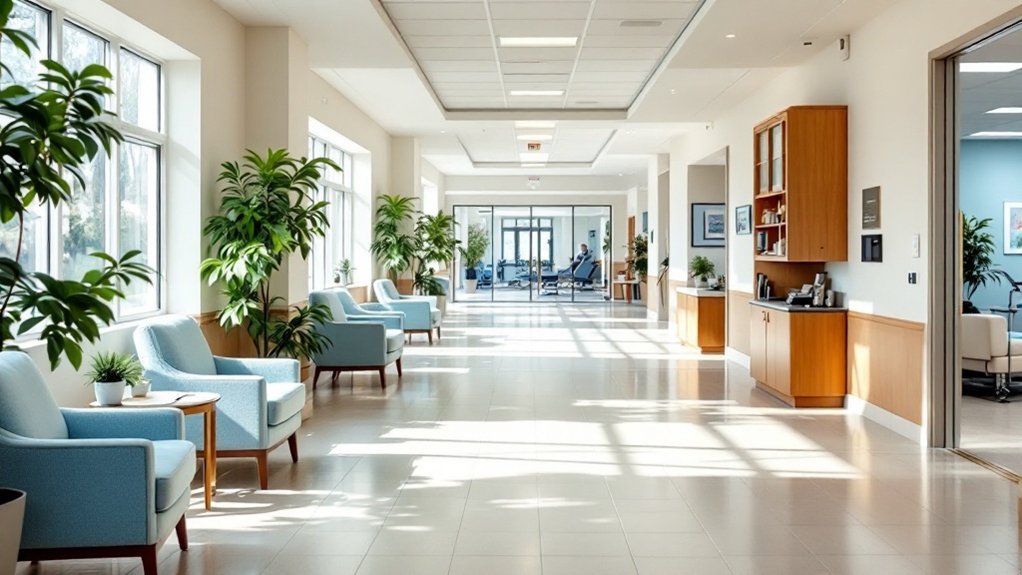

To select an ideal nursing home, you'll need to evaluate five essential metrics: staffing ratios (ensuring 24-hour RN/LPN coverage), CMS facility ratings (targeting 3+ stars), thorough safety protocols, rehabilitation services, and environmental conditions. Focus your assessment on nurse-to-resident ratios, documented complaints, security infrastructure, therapy program effectiveness, and cleanliness standards. This systematic approach to facility evaluation reveals significant distinctions that impact quality of care.
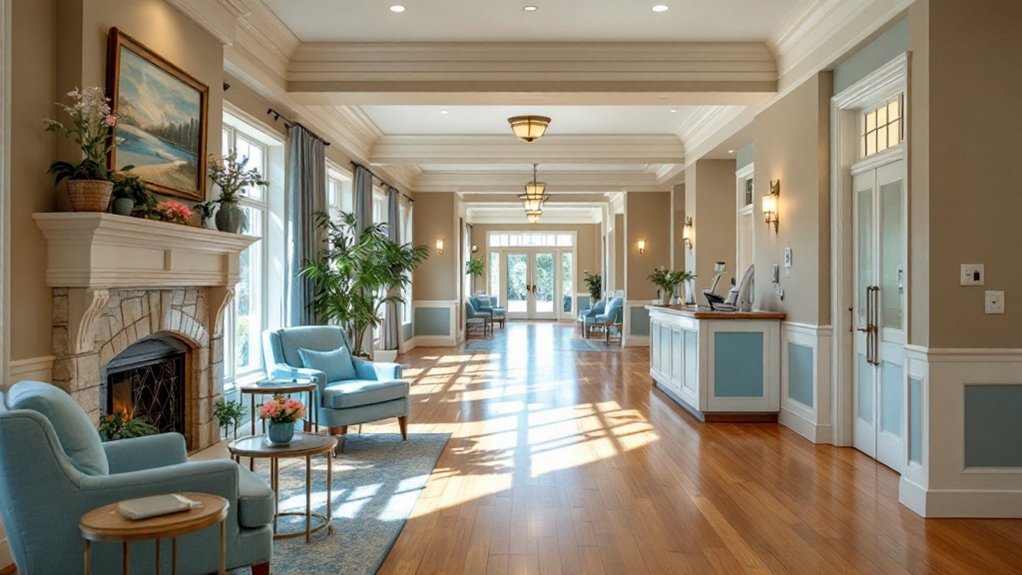
When evaluating potential nursing home facilities, how can you guarantee ideal care for your loved ones while traversing the complex landscape of long-term healthcare options? Your assessment must begin with a thorough examination of the facility's staffing metrics, particularly the nurse-to-resident ratios, alongside verification of 24-hour nursing coverage by licensed practical nurses (LPNs) and registered nurses (RNs).
You'll need to analyze the facility's Centers for Medicare & Medicaid Services (CMS) ratings while investigating any documented complaints or incidents of neglect. The quality ranking is particularly important since 81% of CareOne facilities have achieved three stars or higher in their CMS ratings.
Safety protocols demand rigorous scrutiny of the facility's security infrastructure, including surveillance systems, emergency response procedures, and compliance with federal safety regulations. You'll want to verify the implementation of extensive fire safety protocols, including the frequency of emergency drills and the strategic placement of safety equipment such as handrails and emergency call systems throughout the facility. It's essential to confirm that the facility has clearly marked exits and adequate lighting in all areas.
The rehabilitation services warrant particular attention, as you'll need to evaluate the scope and effectiveness of physical, occupational, and speech therapy programs. You should examine the credentials of the rehabilitation staff and confirm the facility's commitment to developing individualized treatment plans that incorporate evidence-based methodologies and regular progress assessments. Unlike assisted living facilities, nursing homes provide comprehensive medical care and continuous supervision for those with severe health conditions.
The quality of personal attention serves as a critical determinant, necessitating observation of staff-resident interactions and verification of culturally sensitive care protocols. You'll need to assess how the facility implements personalized care plans while maintaining resident privacy and autonomy through established operational procedures and documented policies.
Personal care quality hinges on staff interactions and cultural sensitivity, ensuring dignity through individualized attention while safeguarding resident autonomy.
Environmental conditions require meticulous evaluation, focusing on the facility's adherence to rigorous cleaning protocols and maintenance schedules. You should conduct a thorough inspection of common areas, dining facilities, and resident rooms, paying particular attention to air quality control measures and the efficiency of laundry services.
The presence or absence of malodors often serves as a reliable indicator of the facility's commitment to maintaining ideal hygiene standards, while the overall cleanliness reflects the effectiveness of their daily operational procedures and quality control mechanisms.
Frequently Asked Questions
What Happens if My Insurance Coverage Runs Out During Nursing Home Care?
When your insurance coverage ends, you'll need to utilize alternative payment methods, including Medicaid if you meet income requirements, veterans' benefits, reverse mortgages, or personal assets.
You must proactively explore these options before coverage expires, as Medicare only covers skilled nursing care for up to 100 days.
Consult an elder law attorney to navigate Medicaid applications and resource management strategies to prevent potential facility transfer.
Can Residents Bring Their Own Furniture and Personal Belongings?
You can bring personal furniture and belongings to nursing homes, subject to facility regulations and space limitations.
Federal guidelines protect residents' rights to retain possessions that don't compromise safety or health standards.
While facilities provide basic furnishings, you're encouraged to personalize your space with labeled items like photos and familiar furniture.
However, valuable items should be avoided due to potential loss or theft.
How Often Can Family Members Visit Residents?
You'll find that nursing homes must provide open visitation at all times, as mandated by federal regulations, with only limited exceptions for COVID-19 infections or quarantine situations.
While facilities can't restrict the number of individual visitors, they may stagger visit times during peak periods to maintain physical distancing.
You'll need to follow infection control protocols, including mask requirements in communal areas unless all parties are vaccinated.
What Activities Are Available for Residents With Limited Mobility?
Nursing homes offer numerous activities tailored for residents with mobility constraints, including chair yoga, balloon games, and upper-body stretching exercises that you'll find beneficial for maintaining physical function.
You'll have access to cognitive activities like word searches, puzzles, and brain games from the comfort of your chair, while social engagement opportunities include board games, movie screenings, and art therapy sessions that don't require significant movement.
Are Pets Allowed to Visit or Live in the Nursing Home?
Most nursing homes permit pet visitation and some allow residents to keep personal pets, though policies vary greatly by facility.
You'll find that 90% of facilities require proof of current vaccinations, health certificates, and behavior assessments.
While dogs and cats are most commonly accepted, size restrictions typically limit dogs to under 25 pounds.
You'll need to verify specific regulations, including designated visiting areas and scheduling protocols, with each facility's administration.