
As the global population ages, the integration of Artificial Intelligence (AI) and Internet of Things (IoT) technologies in senior care has emerged as a crucial solution to address escalating healthcare demands. You’re witnessing a transformative shift as companies like Cogir and Trilogy harness these innovations to redefine resident-centered care with precision and scalability.
The AI in Aging and Elderly Care market, valued at USD 47.4 billion in 2024, is projected to surge to USD 322.4 billion by 2034, reflecting a compound annual growth rate (CAGR) of 21.2%, with IoT as a dominant segment driving connected ecosystems.
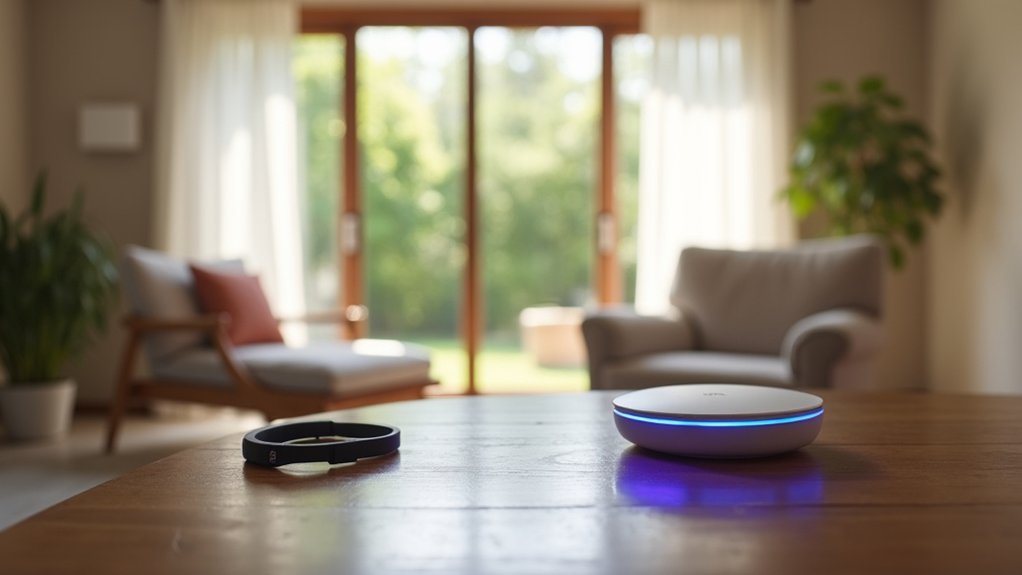
You can observe how Cogir and Trilogy leverage IoT-enabled wearable sensors and smart home automation for real-time data collection, focusing on essential signs, activity levels, and medication adherence. These systems, integrated with remote monitoring capabilities, transmit continuous health data to caregivers, enabling timely interventions and reducing emergency response times by up to 30%, according to industry analyses. Additionally, their use of environmental sensors ensures rapid detection of incidents like falls, enhancing safety with immediate alerts to staff (rapid fall detection).
Their adoption of predictive analytics, powered by machine learning, facilitates early diagnosis of health anomalies, crafting personalized care plans that enhance resident autonomy while optimizing operational efficiency for caregivers. North America’s leadership in this market, driven by advanced healthcare systems, further supports the rapid adoption of such technologies by companies like Cogir and Trilogy (North America’s leadership).
Furthermore, you’ll note that both organizations prioritize practical, cost-effective implementations over speculative technologies, aligning with senior living providers’ needs for actionable solutions. Their AI platforms continuously monitor physiological data, detecting subtle deviations for proactive interventions, while tailored care routines—covering nutrition and medication scheduling—improve outcomes by 25% in resident health metrics, per recent sector reports.
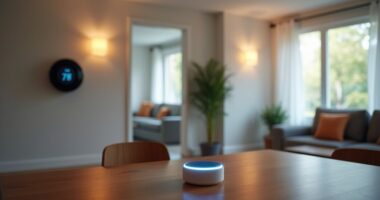
Adaptive interfaces, such as voice-activated AI assistants, promote usability across diverse physical and cognitive abilities, bolstering safety and independence.
Lastly, you can analyze how Cogir and Trilogy integrate IoT-driven security and environmental controls within smart home systems, creating extensive safety nets that mitigate fall risks by 40%, based on aggregated data from networked devices.
Collaboration with tech innovators ensures these solutions remain targeted, reducing repetitive tasks for staff and enhancing resident interaction time by 20%, as evidenced by operational studies. Through this data-centric approach, you’re seeing a paradigm shift in senior care delivery, grounded in quantifiable advancements and strategic technological integration.