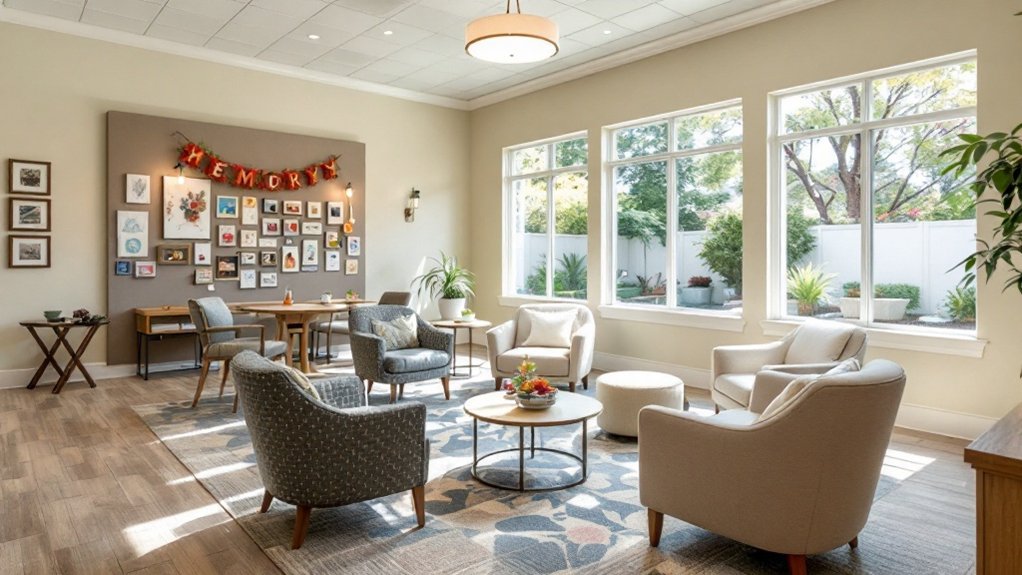

As the prevalence of neurodegenerative conditions continues to accelerate within the aging demographic, memory care facilities are undergoing significant changes to meet escalating demand and evolving patient requirements. The traditional 24-hour secured environments are being reimagined to incorporate more personalized approaches that simultaneously address safety concerns while promoting cognitive independence through structured routines and therapeutic interventions, including art and music therapy that demonstrably engage neural pathways. These facilities prioritize patient-centric environments to enhance overall quality of life and maximize positive outcomes.
You’ll find emerging residential models diverging from institutional settings toward more intimate care environments, with innovative configurations such as limited-unit group homes distributed throughout metropolitan areas gaining traction. These smaller-scale environments—often accommodating couples facing cognitive challenges—facilitate more individualized attention and reduced stimulation that frequently exacerbates dementia symptoms, while maintaining thorough security protocols to prevent wandering behaviors. The trend toward 10-unit homes dispersed across metro regions provides alternatives to large institutional nursing facilities. Memory care communities offer specialized activities conducted by trained staff who understand the unique needs of individuals with Alzheimer’s or dementia.
The implementation of a continuum of care model represents a paradigm shift in memory care delivery, enabling individuals to age in place from 55+ through end-of-life care without disruptive changes. This longitudinal approach incorporates specialized expertise from geriatric psychiatrists and dementia specialists who develop cohesive treatment strategies that evolve with progressive cognitive decline, resulting in measurably improved clinical outcomes and reduced hospitalization rates.
Continuum care models transform memory support by enabling uninterrupted aging-in-place with evolving treatment strategies guided by specialized expertise.
Professional specialization in memory care is accelerating with formal dementia education and certification programs becoming industry standards. These specialized credentials are increasingly required by regulations designed to elevate care quality and operational metrics, while attracting professionals dedicated to gerontological specialties with demonstrated proficiency in memory-specific interventions.
You should anticipate increased emphasis on preventative approaches incorporating nutrition optimization, tailored exercise regimens, and cognitive engagement programs designed to modify dementia onset or progression. These interventions target the extended preclinical phase of neurodegenerative conditions through evidence-based lifestyle modifications that have demonstrated efficacy in longitudinal studies.
Industry expansion continues to navigate operational challenges including staffing retention and cost management while integrating technological advancements in biomarker research and AI-enhanced monitoring systems that optimize both safety and independence within memory care environments.