

You'll find distinct operational models between assisted living facilities and nursing homes, with assisted living promoting independence through apartment-style living and basic care support, while nursing homes deliver intensive medical supervision in clinical settings. The financial structures differ considerably – assisted living typically requires private payment, whereas nursing homes often accept insurance coverage. Staff certifications, length of stay metrics, and admission requirements also diverge substantially between these care options, warranting careful evaluation of your specific needs.
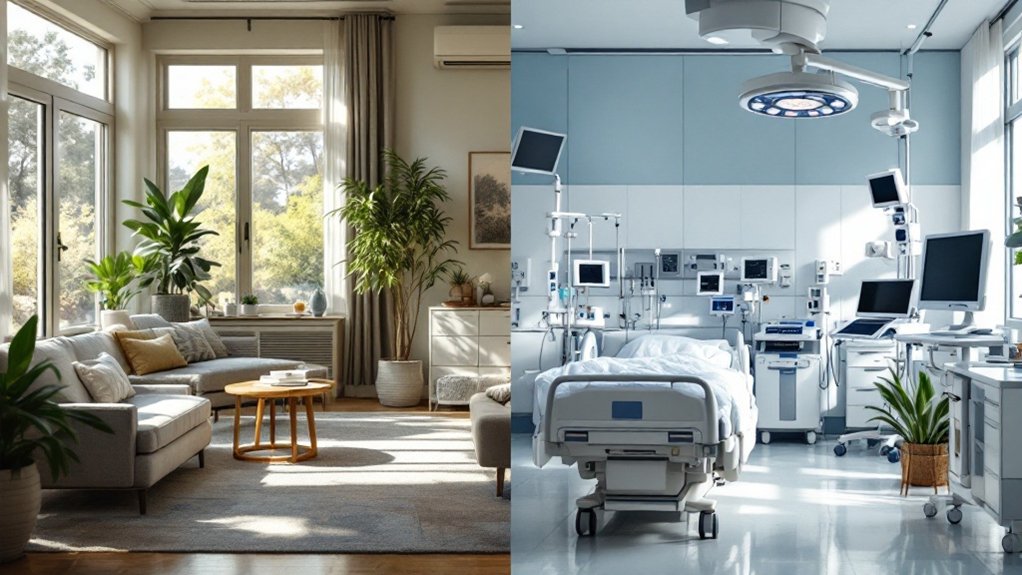
When evaluating senior care options, understanding the fundamental distinctions between assisted living facilities and nursing homes becomes essential for making informed healthcare decisions. The primary differentiation lies in their core purpose: assisted living facilities emphasize independence and daily living support, while nursing homes focus on thorough medical care and continuous supervision for individuals with acute or chronic health conditions.
You'll find that assisted living facilities operate with a residential, community-centric approach, offering private rooms or suites that closely resemble upscale apartment living. These environments incorporate luxury amenities and emphasize social engagement, with residents typically maintaining significant autonomy in their daily routines while receiving support for basic medical needs such as medication management and routine health monitoring. Insurance policies rarely extend coverage to assisted living stays, making it essential to plan for out-of-pocket expenses. Regular activities like group games and art classes enhance the quality of life for assisted living residents.
In contrast, nursing homes provide intensive medical supervision with 24/7 skilled nursing care, specialized equipment, and staff holding advanced medical certifications. The clinical setting enables complex medical interventions, IV medication administration, and continuous health monitoring, making these facilities ideal for individuals requiring extensive medical oversight. Care providers focus on delivering constant medical attention to address significant health needs.
Statistical data indicates that nursing home residents generally experience longer stays, exceeding two years on average, compared to the one-to-two-year average stay in assisted living communities.
Financial considerations reveal substantial variations between these options, with assisted living typically presenting lower costs but limited insurance coverage options. While nursing homes often receive coverage through state and private insurance programs, assisted living frequently requires out-of-pocket payments or specialized insurance arrangements. The cost differential reflects the intensity of medical services, staff certifications, and facility infrastructure requirements.
The admission criteria and length-of-stay patterns demonstrate distinct operational models between these facilities. Nursing homes accommodate both short-term rehabilitation stays and extended care needs, while assisted living facilities offer flexible care levels that can adjust to residents' evolving requirements over time.
Your selection between these options should primarily depend on medical needs, financial resources, and desired lifestyle preferences, with careful consideration of each facility's specific offerings and limitations.
Frequently Asked Questions
Can Married Couples Live Together in Assisted Living or Nursing Homes?
You'll find that most assisted living facilities accommodate couples living together in shared apartments, offering independence while providing daily support services.
In nursing homes, however, your options may be more limited due to intensive medical care requirements, though some facilities offer specialized arrangements.
Your best option might be continuing care retirement communities (CCRCs), which provide flexible living arrangements as care needs change over time.
What Happens if Residents Run Out of Money During Their Stay?
When you run out of money during a senior care stay, Medicaid often becomes your primary coverage option, though eligibility varies by state.
You'll need to meet both financial and medical requirements, typically requiring assistance with multiple activities of daily living.
Your facility may require relocation to a shared room, and you'll need to demonstrate continued medical necessity for care to maintain coverage.
Are Pets Allowed in These Facilities?
Pet policies vary considerably between facilities, with assisted living communities generally offering more flexibility than nursing homes.
You'll find that most assisted living facilities allow pets with specific restrictions on size, breed, and vaccination requirements, while nursing homes typically limit pet ownership to visitation rights.
You'll need to pay additional fees and deposits, and you're expected to independently manage your pet's care or arrange external support services.
How Often Can Family Members Visit Residents?
You'll find that most facilities allow daily visitation during designated hours, typically between 10:30 a.m. and 7 p.m., seven days a week.
While advance scheduling isn't always required, you'll need to comply with capacity limits and infection control protocols.
As a family member, you'll have priority access, though facilities may restrict visits during disease outbreaks or when residents are in isolation.
You're generally free to visit within these parameters unless specific health concerns arise.
Can Residents Leave the Facility for Overnight Trips or Vacations?
In assisted living facilities, you'll have greater flexibility to leave for overnight trips, typically requiring advance notification to staff about your travel plans.
You'll need to coordinate medication management and guarantee proper documentation of emergency contacts.
While nursing homes maintain stricter policies due to residents' medical needs, assisted living facilities support independence through accommodating travel arrangements, often helping with pre-trip preparations and safety assessments.